
Custom Steel Work
Distinctive Design With Corten Steel
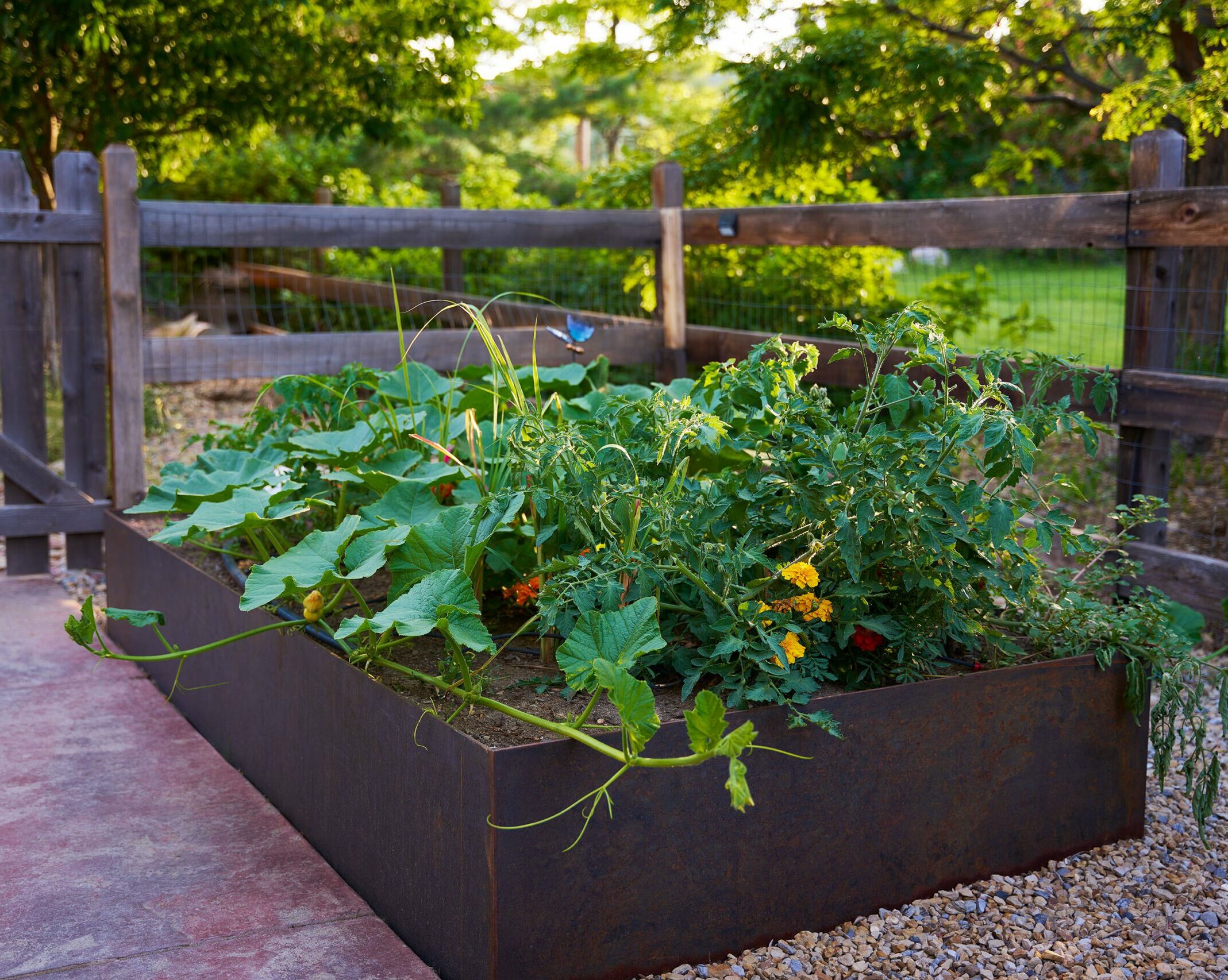
A top pick for sleek, modern design, corten steel offers long-lasting durability and beauty while catching your neighbor’s eye and showing off your lush landscape. Incorporate custom corten steel elements throughout your outdoor living design, from elevated planters to durable retaining walls. You can enjoy the peace of mind knowing this unique material stands up against the elements, requires minimal maintenance, and even adapts over time to what comes its way. A rust-like patina of deep red and brown will only become more stunning over the years, acting as a vibrant contrast to your green plantings.
Perhaps most impressive, corten steel lasts for over 100 years, particularly when installed by an attentive team that custom-builds the structures for your landscape. As the rust patina develops naturally over time, it remains strong against corrosion, even in the vast range of Colorado weather.
Frequently Asked Question
What is Corten steel and why is it used in landscaping?
Corten steel is a weathering steel alloy that forms a stable rust-colored surface layer, and that layer protects the metal underneath instead of continuing to corrode through it. Landscape designers use it for planter beds, retaining edges, water features, screens, and stair risers where a clean structural line is the goal. The warm patina reads well against Colorado stone, native plantings, and modern architecture, and it needs no paint or coating maintenance. Down to Earth Landscaping fabricates custom steel elements as part of larger design and build projects.
Does Corten steel stain the surrounding patio or concrete?
Corten steel releases rust runoff during its first weathering season, and that runoff can stain adjacent light-colored concrete or pavers if the detail is not planned for. Down to Earth Landscaping addresses this through drainage design, gravel or planting buffers at the base of steel elements, and material placement that keeps runoff away from finished light surfaces. Once the patina stabilizes, usually within the first year, runoff largely stops. Discussing this detail during design costs nothing, while correcting a stained patio afterward is difficult.