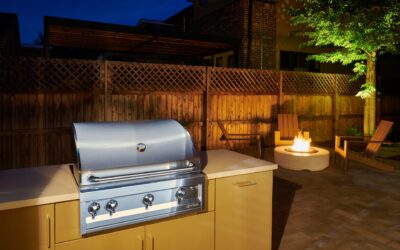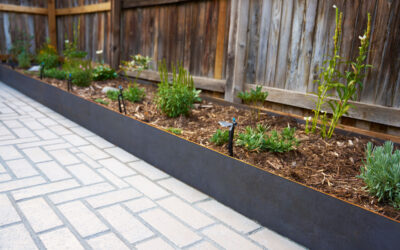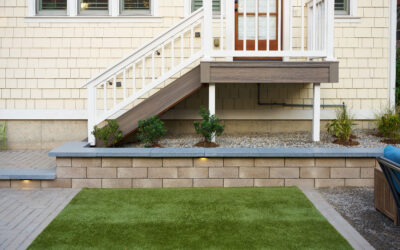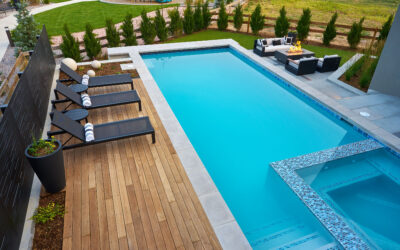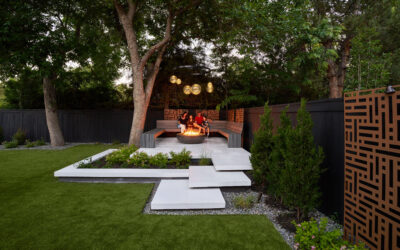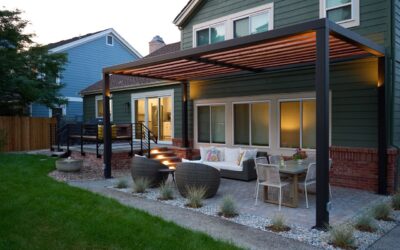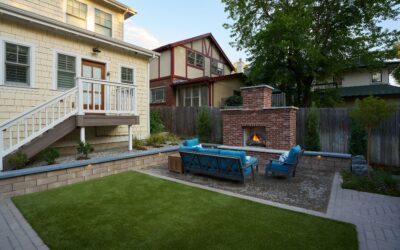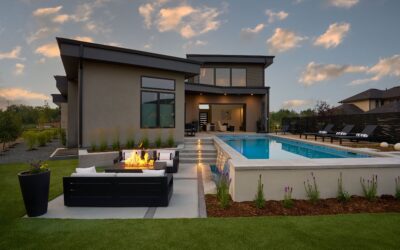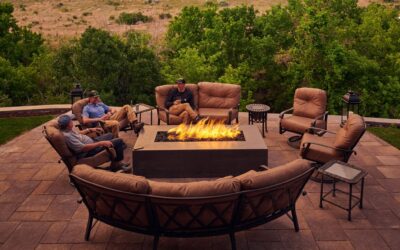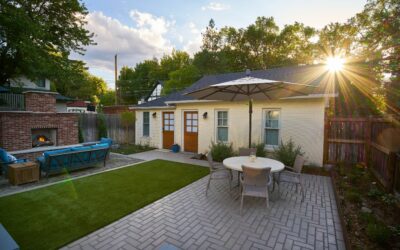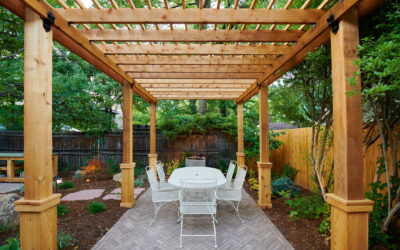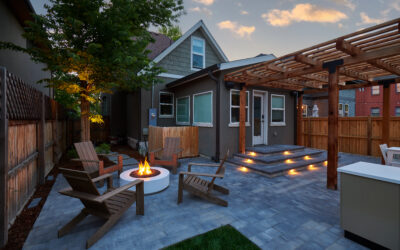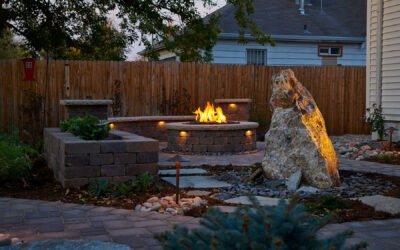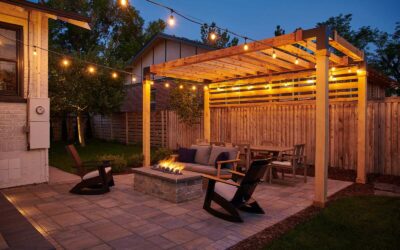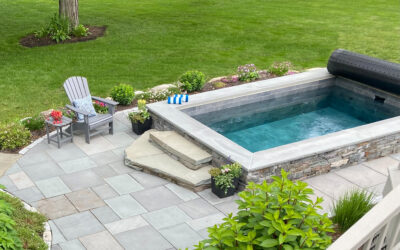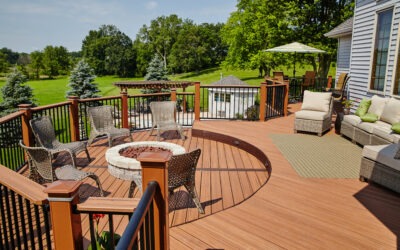
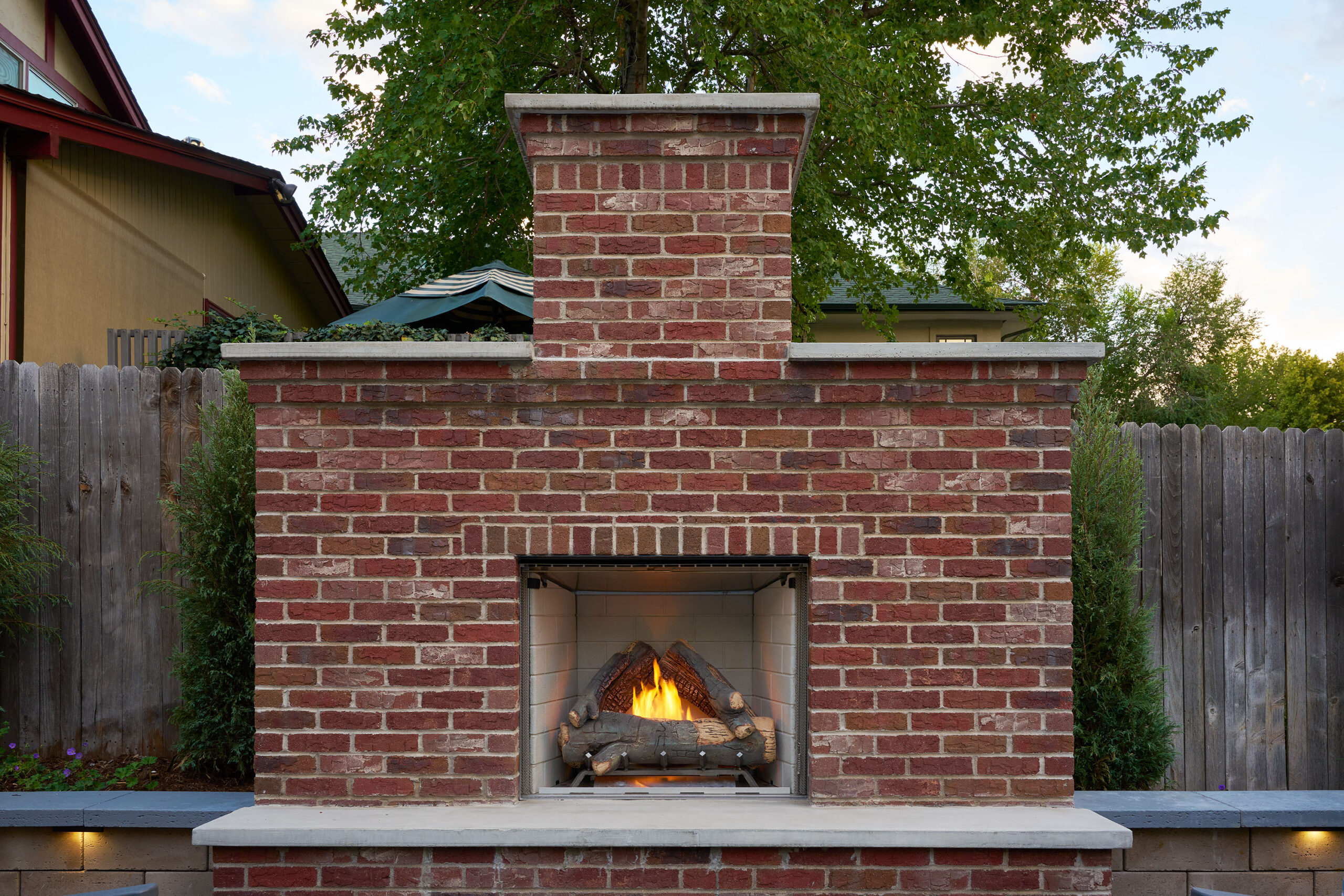
An outdoor fireplace turns a patio into the place everyone gathers, the anchor a whole backyard organizes around. That is also why a rushed outdoor fireplace installation shows its flaws so fast in Englewood, CO, where altitude, dry air, and a hard freeze-thaw cycle punish anything built without a plan.
The part that decides whether a fireplace draws well and stands for decades sits where no one looks: the footing under it, the firebox and flue inside it, and the materials chosen for this specific climate. Get those right once and the fireplace becomes a fixture. Get them wrong and the cracks, the smoke problems, and the settling start the first year.
Down to Earth Landscaping has designed and built outdoor living spaces across the Denver metro since 2012, and a three-time ALCC Award-winning portfolio of fire features and patios is what shapes how the team approaches a fireplace before a single block gets set. That experience reads a property’s grade, wind, and soil first, because those conditions decide how the fireplace gets built.
The sections below cover what the work actually involves, how to choose between fuel types and placement, and what separates an installer who builds for the long run from one who builds for the photo.
Related: 6 Ways Landscaping and an Outdoor Fireplace Transform Denver Country Club, CO Properties
What Does Outdoor Fireplace Installation Actually Involve?
Outdoor fireplace installation is masonry and structural work, not decoration. The finished stone face is the last and smallest part of the job. Everything that controls safety, draft, and lifespan happens in the foundation, the firebox, and the flue.
The Foundation Under the Fireplace
A masonry fireplace weighs thousands of pounds, and that weight needs a footing built to carry it. The work starts with excavation and a poured concrete footing sized to the structure and set below the frost line, so the ground freezing in winter does not heave the fireplace and split it apart. Along the Front Range, frost depth and expansive soils make this step non-negotiable. A fireplace set on a thin slab or on undisturbed clay tilts and cracks within a few seasons.
Reinforcement matters as much as depth. Rebar ties the footing together so the load spreads evenly instead of concentrating on one weak point. A crew that pours a proper reinforced footing builds a fireplace that stays plumb and square for the life of the patio.
The Firebox and Flue
Inside the structure, the firebox and flue do the real work. The firebox holds the heat and gets built from firebrick and refractory mortar rated for the temperatures a fire produces. Standard block and mortar break down under that heat, so the materials here are specific and not interchangeable.
The flue carries smoke up and away, and its size and height decide whether the fireplace draws cleanly or pushes smoke back toward the seating. A correctly sized flue, built tall enough for the firebox opening, is the difference between an evening around the fire and an evening in the smoke. This is the calculation weekend builds skip most often.
Gas Lines, Clearances, and Code
A gas fireplace adds a gas line that a licensed professional runs and pressure-tests. Every fireplace also answers to clearance rules that keep combustible materials, fences, eaves, and low branches a safe distance from the firebox. Arapahoe County and the surrounding municipalities enforce these standards, and a permitted installation protects the homeowner and the property. An installer who works this area builds to those codes from the start rather than discovering them after the fact.
Drainage and Water Management
Water is the quiet enemy of outdoor masonry. Rain and snowmelt that collect around the footing or soak into the structure freeze, expand, and crack the fireplace from the inside. A proper build slopes the surrounding patio to move water away, seals the masonry against moisture, and caps the chimney so rain does not fall straight into the flue. In a climate that cycles above and below freezing dozens of times a winter, this water management keeps hairline gaps from turning into structural cracks.
Integration With the Patio and Yard
A fireplace rarely stands alone. It ties into the patio surface, the seating, the surrounding grade, and often a full outdoor living layout with a kitchen or lighting nearby. A design-build team coordinates the fireplace with all of it, so the finished structure looks intentional and the drainage, the traffic flow, and the sight lines all work together instead of fighting each other.
Wood-Burning or Gas: Which Outdoor Fireplace Is Right for Your Yard?
The choice between wood and gas shapes the cost, the maintenance, and the daily experience of the fireplace. Neither option wins outright. The right answer depends on how a household plans to use the space.
The Case for Wood-Burning
A wood-burning fireplace delivers the crackle, the scent, and the radiant heat that many homeowners want from a fire. It needs no gas line, so placement stays flexible. The tradeoffs are real: wood requires storage, the fire takes time to build and tend, and cleanup follows every use.
Colorado adds one more consideration. The Front Range sees fire restrictions and burn bans during dry stretches, and a wood fireplace goes unused whenever a ban is in effect. A household that entertains through summer weighs that limitation against the appeal of a real wood fire.
The Case for Gas
A gas fireplace lights with a switch, produces steady heat, and creates no ash or smoke. It runs during most burn restrictions that shut down wood fires, which extends the usable season in this climate. The upfront cost runs higher because of the gas line and the burner system, and the flame reads more uniform than a wood fire.
For homeowners who want the fireplace available on a weeknight with no setup, gas earns its cost through convenience and a longer season of use.
Matching the Fireplace to the Space
Beyond fuel, the size and style of the fireplace answer to the yard. A tall fireplace anchors a large patio and blocks wind, while an oversized structure overwhelms a compact space and throws too much heat into a small seating area. The material and finish tie the fireplace to the home’s architecture and the rest of the hardscape. A design conversation up front settles these choices before any material gets ordered, which protects the budget and the result.
Maintenance Over the Years
Every outdoor fireplace needs upkeep, and the amount depends on the fuel. A wood fireplace needs the firebox cleared of ash and the flue checked for buildup that restricts draft and raises fire risk. A gas fireplace needs the burner and gas connections inspected so it lights reliably and burns clean. Both benefit from an annual look at the masonry for early cracks, because a small repair caught in spring costs far less than a rebuild after the damage spreads. A homeowner who plans for this upkeep keeps the fireplace performing for years.
How Do You Choose the Right Spot for an Outdoor Fireplace in Colorado?
Placement decides how often a fireplace gets used and how well it performs. The best spot balances wind, sun, safety, and the way people move through the yard.
Reading Wind and Prevailing Weather
Wind drives smoke and steals heat. A fireplace positioned against the prevailing wind pushes smoke into the seating and burns through fuel fast. A team that studies the site places the fireplace so it blocks wind for the gathering area rather than funneling it, and orients the opening toward where people sit. Along the Front Range, afternoon gusts and sudden weather shifts make this reading especially important.
Sun, Shade, and Season
Coloradans use their yards year-round, so the sun matters. A fireplace paired with a patio that catches afternoon and evening sun extends the comfortable hours into the shoulder seasons. Pairing the fireplace with a pergola or shade structure balances the hot high-altitude sun during the day against the warmth of the fire at night.
Safety Clearances and Sight Lines
Placement also answers to safety. The fireplace needs clearance from the house, fences, trees, and any low structures, and the design routes foot traffic away from the fire rather than through it. Good placement also frames a view, so the fireplace becomes a focal point from the house and the yard rather than an object stuck in a corner. Balancing all of these at once is where an experienced designer earns the fee.
Distance From the House and Entertaining Flow
How far the fireplace sits from the house shapes how the space gets used. Set it too far and the walk discourages a quick fire on a cool night. Set it too close and heat and smoke drift toward the doors and windows. The right distance keeps the fireplace an easy few steps from the kitchen or the back door while holding heat and smoke clear of the home. The seating then wraps the fire without blocking the path between the house and the rest of the yard.
Related: Outdoor Kitchen and Fire Pit Designs for Highlands Ranch & Lone Tree, CO Homes
What Should You Look for in an Outdoor Fireplace Installation Company?
Plenty of contractors offer to build a fireplace. Far fewer build one that drafts correctly and survives Colorado winters. The difference shows up in credentials, in the plan on paper, and in the way the company prices and stands behind the work.
Local Experience and a Real Portfolio
A company that has built fire features along the Front Range understands the frost depth, the soil, the wind, and the burn regulations that a general contractor overlooks. Ask how long the company has worked in the area and ask to see completed fireplaces nearby. Down to Earth Landscaping has built outdoor living spaces across the Denver metro since 2012 and holds three ALCC awards for its work, which means its crews design for local conditions rather than a generic template.
A Design-Build Process, Not Just a Crew
The strongest sign of a serious installer is a design process that plans the fireplace as part of the whole space. A company that produces a design, explains the footing and the flue, and coordinates the fireplace with the patio and drainage treats the project as a system. A crew that jumps straight to stacking block skips the parts that determine whether the fireplace works.
Licensing, Insurance, and Permits
Verify licensing and insurance before any work begins, and confirm the company pulls the required permits and runs gas lines through a licensed professional. A properly insured, permitted installation protects the homeowner if anything goes wrong, and a company that handles permitting as routine has done this correctly many times.
A Clear Estimate and Quality Materials
A trustworthy estimate breaks out excavation, the footing, the firebox materials, the flue, the gas work, and the finish as separate lines, so a homeowner sees where the money goes and where a cheaper bid cuts a structural corner. Ask about the materials too. Firebrick, refractory mortar, and quality segmental units or natural stone resist the freeze-thaw wear that degrades bargain materials. The company that specifies the right materials builds a fireplace that looks the same in year ten as it did on day one.
References and a Written Warranty
A company with a track record shows it. Ask for photos of fireplaces the crew has built nearby, and ask to speak with past clients about how the structure held up after a winter or two. The most useful reference is a fireplace that has drawn clean and stayed crack-free through several freeze-thaw cycles. Confirm the warranty as well, and check what it covers and for how long. A company that guarantees the structure in writing has confidence in the work under the finish.
What Does the Outdoor Fireplace Installation Process Look Like?
A professional outdoor fireplace project follows a clear sequence, and knowing it prepares a homeowner for the work and shows where quality gets built in. At Down to Earth Landscaping, the fireplace runs through a full design-build process rather than a standalone task dropped onto a patio.
Consultation and Design
The process opens with a consultation and a study of the property. The team reads the grade, the soil, the wind, and the way the household wants to use the space, then translates that into a design that sets the fireplace in context with the patio and the rest of the yard. Seeing the design before construction lets a homeowner adjust the size, placement, and materials while changes cost nothing.
Excavation, Footing, and Build
From there the project moves through a consistent set of steps:
- A consultation, site assessment, and design tailored to the property
- Permitting and gas-line planning for the fireplaces that require them
- Excavation and a poured, reinforced footing set below the frost line
- Construction of the firebox from firebrick and refractory materials
- A correctly sized and vented flue built to draw cleanly
- Gas-line installation and pressure testing by a licensed professional
- The stone or masonry finish tied to the home and the hardscape
- Integration with the patio, seating, lighting, and drainage
- A final walkthrough and instruction on operating the fireplace
Each step depends on the one before it, which is why an experienced crew and a coordinated process produce a stronger result than a rushed build. The care taken during the footing and the firebox determines whether the visible fireplace performs for decades.
Timeline and Site Care
Timeline depends on the size and complexity of the fireplace and whether gas and permitting are involved. A straightforward wood fireplace wraps up faster than a large gas structure integrated into a full outdoor living build. A professional gives a realistic schedule up front, protects the site during the work, and restores the surrounding yard once the fireplace is complete.
Anchor Your Backyard With an Outdoor Fireplace From Down to Earth Landscaping
An outdoor fireplace is a long-term investment in how a family uses its yard, and the installer decides whether that investment lasts. The right partner builds the footing, the firebox, and the flue to a standard the finished stone never reveals, so the fireplace draws clean and holds its ground through every Colorado season.
Homeowners across Englewood and the Denver metro trust Down to Earth Landscaping to design and build outdoor fireplaces that pair a refined look with the structure to back it up. As a three-time ALCC Award winner building outdoor living spaces since 2012, the team treats the fireplace as the anchor of a larger space and coordinates it with the patio, the lighting, and the yard around it.
Schedule an outdoor fireplace installation consultation with Down to Earth Landscaping today, and work with a team that builds fireplaces designed to last in Englewood, CO.