A homeowner comparing composite deck builders in Englewood, CO eventually runs into a decision that has nothing to do with board color or brand: how the boards actually attach to the frame. Hidden fastener systems and traditional face-screwing produce very different results, both in appearance and in how the deck performs over years of Colorado’s sun, snow, and temperature swings.
Down to Earth Landscaping has built decks and outdoor living spaces across the Denver metro area since 2012, earning recognition as a three-time ALCC Award Winner under the leadership of Chuck and Jeff. That experience across hundreds of Front Range decks shapes how the company advises homeowners on fastening method, since the right choice depends on more than personal preference alone.
Getting this decision right matters more on a composite deck than it does on other decking materials, since composite boards behave differently than wood under fastening stress and thermal movement.
A fastening approach borrowed from wood deck construction, applied without adjustment to composite material, sometimes produces results that fall short of what the material is actually capable of delivering.
Related: Choosing the Right Deck Builder in Englewood, CO: A Complete Guide for Homeowners
What’s the Difference Between Hidden Fastener Systems and Face-Screwed Boards?
Face-screwing attaches composite boards to the deck frame with screws driven directly through the top surface of each board, a method that’s been standard in deck construction for decades.
Hidden fastener systems instead secure boards from the side or underneath, using clips or a grooved-edge system that leaves the top surface completely free of visible screw heads.
The visual difference is immediately obvious. A face-screwed deck shows a regular pattern of screw heads across every board, which some homeowners find perfectly acceptable and others consider a distraction from an otherwise clean composite surface.
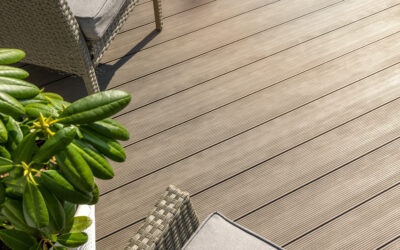
A hidden fastener deck presents a continuous, unbroken surface with no visible hardware, a look that’s become increasingly popular as composite decking has moved toward a more refined, high-end aesthetic.
How Each System Actually Works
Face-screwing requires pre-drilling in most composite materials to prevent the board from cracking or mushrooming around the screw, followed by driving a color-matched composite screw through the board into the joist below.
Hidden fastener systems vary by manufacturer, but most rely on a clip that sits in a groove milled into the side of each board, with the clip itself screwed into the joist. As one board goes down, the next board’s groove slides over the exposed clip edge, locking the boards together without any fastener passing through the visible surface.
Some composite board lines are manufactured specifically for one system or the other, with grooved edges built in for hidden fasteners, while others accommodate either method depending on how a builder chooses to install them.
Down to Earth Landscaping selects board and fastening combinations based on both the manufacturer’s specifications and the look a homeowner wants for their finished deck.
Board Groove Design Varies Between Manufacturers
Not all grooved composite boards use the same clip design, and mixing components from different manufacturers, a board from one brand paired with a clip system from another, sometimes leads to a poor fit that compromises the connection’s strength.
Down to Earth Landscaping sources matched board and fastener systems from the same manufacturer whenever possible, since manufacturer-tested combinations carry warranty coverage that mixed components typically don’t.
Does a Hidden Fastener System Cost More Than Face-Screwing?
Hidden fastener systems typically add cost to a project compared to traditional face-screwing, both in materials and labor.
The clips themselves cost more per linear foot than composite screws, and installation takes longer since each clip has to be positioned and secured individually before the next board locks into place, compared to the more straightforward process of driving screws directly through a board’s surface.
Labor Time Differences Add Up Across a Full Deck
A face-screwed deck installs faster because the process is more direct, position the board, drive the screws, move to the next board. Hidden fastener installation requires more precise positioning at each step, since the clip spacing and board alignment need to stay consistent across the entire deck surface to keep the hidden fastener grooves properly engaged.
On a larger deck, this time difference becomes more noticeable, and Down to Earth Landscaping factors this into project quotes based on the specific fastening method a homeowner selects.
This labor difference tends to scale with deck size rather than staying constant, which means the cost gap between the two methods often grows on larger projects rather than shrinking.
A small deck addition typically sees only a modest cost difference between the two approaches, while a full-width deck spanning the back of a home sees a more substantial difference in both material and labor cost once the full square footage is factored in.
Why Many Homeowners Choose Hidden Fasteners Despite the Cost
Even with the added cost, many homeowners choose hidden fastener systems specifically for the clean appearance and the practical benefit of not having exposed screw heads that loosen, corrode, or create small points where moisture collects over time.
For homeowners prioritizing a premium, uninterrupted surface, especially on more visible or higher-end outdoor living spaces, the added cost often gets weighed against the finished appearance rather than against face-screwing’s lower price point alone.
How Does Colorado’s Climate Affect Which Fastening Method Performs Better?
Colorado’s dramatic temperature swings, hot, intense summer sun followed by rapid cooling after sunset, and freeze-thaw cycles through the winter months, cause composite boards to expand and contract more than materials in milder, more stable climates. Both fastening methods need to accommodate this movement, but they do so differently.
Face-Screwed Boards and Thermal Movement
A face-screwed board is fixed at each screw point, which means the board’s expansion and contraction happens between those fixed points rather than uniformly across its length.
Over time, and especially at Colorado’s higher elevations where temperature swings intensify, this often leads to slight buckling or waviness in a face-screwed board if the screws were spaced too far apart or driven without accounting for expansion gaps between boards.
Getting screw spacing and pre-drilled hole sizing right becomes especially important in this climate, since a hole drilled too tight restricts the board’s ability to expand and contract, concentrating stress at that fixed point rather than distributing it evenly.
Down to Earth Landscaping follows manufacturer-specified spacing and gapping guidelines closely, adjusting where needed for the specific conditions a deck faces based on sun exposure and orientation.
Hidden Fastener Systems and Thermal Movement
Hidden fastener clips generally allow for a small amount of lateral movement as boards expand and contract, since the board isn’t rigidly fixed at multiple points along its length the way a face-screwed board is.
This flexibility lets hidden fastener systems handle Colorado’s temperature swings with less visible buckling over time, provided the clips and gapping were installed according to the manufacturer’s specifications for the local climate.
Altitude-Specific Installation Considerations
Denver metro area elevations mean composite decking experiences more intense UV exposure and faster temperature swings between day and night than decking installed at lower elevations.
Down to Earth Landscaping accounts for these conditions when specifying board gapping and fastener spacing, since installation guidelines developed for more moderate climates don’t always translate directly to Front Range conditions without adjustment.
Which Method Looks Better and Holds Up Longer Over Time?
Appearance is largely subjective, but hidden fastener systems consistently produce a more uniform, higher-end look that many homeowners associate with premium composite decking.
Face-screwed boards, while showing visible fasteners, offer a more traditional deck appearance that some homeowners specifically prefer, particularly on properties with a more classic or rustic overall design aesthetic.
Long-Term Durability Comparison
Both systems, when installed correctly by an experienced builder, hold up well over the expected lifespan of quality composite decking. Face-screwed boards sometimes develop minor cosmetic issues over time, screw heads that show slight discoloration or a small amount of surface mushrooming around the screw if pre-drilling wasn’t done correctly.
Hidden fastener systems avoid this specific issue but depend heavily on correct clip installation, since a poorly seated clip eventually works loose and causes a board to shift or lift slightly at that connection point.
The quality of the underlying joist structure matters just as much as the fastening method chosen on top of it. Both systems ultimately rely on solid, properly spaced framing beneath the boards, and a deck built on an undersized or improperly spaced joist system will develop problems regardless of which fastening method secures the boards above it.
Down to Earth Landscaping treats framing quality as the foundation that either fastening system depends on, rather than assuming a premium fastening choice compensates for weaker structural work underneath.
What Maintenance Differences to Expect
A face-screwed deck occasionally needs individual screws checked or replaced if one loosens or shows wear, a simple repair that doesn’t require disturbing surrounding boards.
A hidden fastener system, if a clip does fail, sometimes requires more involved repair work to access and replace the clip, since the board itself needs to be lifted to reach the fastening point underneath.
Down to Earth Landscaping discusses these maintenance tradeoffs with homeowners during the material selection process, since the easier long-term repair path is a legitimate factor worth weighing against hidden fastening’s cleaner initial appearance.
Does a Single Deck Ever Combine Both Fastening Methods?
Some homeowners choose a hybrid approach, using hidden fasteners for the main deck surface where appearance matters most, while using face-screwing for stair treads, picture-frame border boards, or other areas where a hidden fastener system isn’t practical or where visible fasteners are less noticeable.
Where Face-Screwing Still Makes Sense
Stair treads, for example, often get face-screwed even on decks using hidden fasteners throughout the main surface, since stairs experience more direct foot traffic and impact than a flat deck surface, and the added fastening security of screws driven directly through the board provides extra confidence in a high-wear area.
Border or picture-frame boards running perpendicular to the main decking sometimes get face-screwed as well, both for structural reasons and because the fastener pattern along a border reads differently than one across a wide open deck surface.
Picture-Frame Borders Present a Special Case
A picture-frame border, where boards run perpendicular around the perimeter of a deck to create a finished, framed appearance, often requires a specific fastening approach regardless of what method secures the main field of decking.
Because border boards typically run in a different direction and meet the field boards at a mitered or butted corner, they need a fastening method that provides reliable structural connection at that transition point, which is frequently face-screwing even on an otherwise hidden-fastener deck.
How Down to Earth Landscaping Approaches Mixed Installations
Down to Earth Landscaping evaluates each deck’s layout individually to determine where hidden fasteners make sense and where face-screwing better serves either structural needs or practical maintenance considerations.
This project-specific approach means two decks built with the same overall composite material often end up with different fastening strategies depending on the specific design, traffic patterns, and priorities of each homeowner.
Planning This Decision Before Materials Are Ordered
Deciding on a mixed fastening approach works best as part of the initial design conversation, rather than as an afterthought once boards have already been ordered and delivered.
Some composite board profiles come pre-grooved for hidden fasteners and require additional preparation to face-screw effectively, while others are milled specifically for face-screwing and don’t accommodate a hidden fastener clip system at all.
Confirming which board profile a homeowner wants, and planning the fastening approach for each section of the deck accordingly, avoids ordering the wrong material for the installation method a homeowner ultimately prefers.
Build Your Composite Deck With Builders Who Get the Details Right
The choice between hidden fasteners and face-screwed boards affects a deck’s appearance, cost, and long-term performance in ways that go well beyond a simple style preference.
Getting fastener spacing, board gapping, and material compatibility right for Colorado’s specific climate conditions is the kind of detail that separates a deck that stays flat and tight for decades from one that develops visible problems within just a few seasons.
Schedule a composite decking consultation with Down to Earth Landscaping to talk through which fastening approach fits your Englewood project and budget.
In Summary
Which fastening method costs more, hidden fasteners or face-screwing?
Hidden fastener systems add cost over face-screwing in both materials and labor, since the clips run higher per linear foot and each board takes longer to lock into place. That cost gap tends to grow on larger decks rather than shrink, since the labor difference scales with square footage. A small deck addition sees only a modest cost difference between the two methods, while a full-width deck spanning the back of a home sees a more substantial one.
Which fastening method holds up better in Colorado’s climate?
Hidden fastener systems generally handle Colorado’s temperature swings with less visible buckling over time, since the clips allow a board to shift slightly as it expands and contracts rather than fixing it rigidly at multiple points. Face-screwed boards sometimes develop slight buckling or waviness at higher elevations when screw spacing and expansion gaps weren’t accounted for during installation. Either method performs well when installed to manufacturer specifications for the local climate.
Does a hidden fastener deck look different from a face-screwed one?
A hidden fastener deck presents a continuous surface with no visible screw heads, a look many homeowners associate with premium composite decking. A face-screwed deck shows a regular pattern of fasteners across every board, which some homeowners prefer for a more traditional or rustic appearance. The choice comes down to the look each homeowner wants for their finished space.
Can a single deck use both fastening methods?
Many decks combine both, using hidden fasteners for the main surface where appearance matters most and face-screwing for stair treads or picture-frame border boards where foot traffic or a mitered corner calls for extra structural connection. Stairs in particular see more direct impact than a flat deck surface, which is why they often get face-screwed even on an otherwise hidden-fastener deck. Planning this mix during the design phase, before boards are ordered, avoids buying material that doesn’t match the intended installation method.
What maintenance differences should homeowners expect between the two systems?
A face-screwed deck typically needs an individual screw checked or replaced if one loosens, a straightforward repair that doesn’t disturb surrounding boards. A hidden fastener system requires more involved repair if a clip fails, since the board has to be lifted to reach the fastening point underneath. Down to Earth Landscaping walks homeowners through this tradeoff during material selection, since the easier long-term repair path is worth weighing against hidden fastening’s cleaner appearance.
Related: Create a Cozy Backyard Retreat With a Deck Builder and Outdoor Fireplace in Lone Tree, CO